
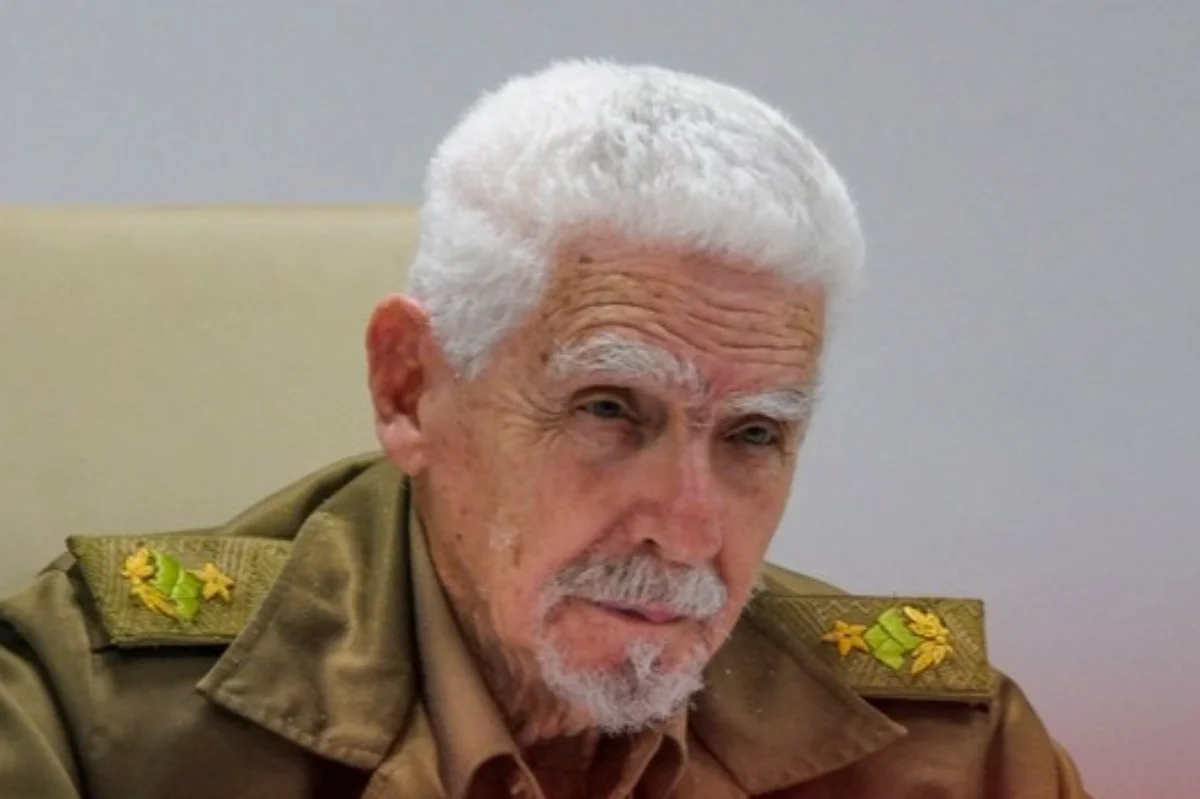
Ramiro Valdés, one of the last historic commanders of the Cuban revolution, died this Sunday, June 21, at age 93. The news was confirmed by a brief official note from the Communist Party, the State, and the Government, which omitted the causes of death. But for ordinary Cubans and the exile community, his passing is not cause for mourning: he was the man who designed and consolidated the apparatus of repression, espionage, and political persecution that keeps the island mired in oppression.
Valdés was the architect of the G2, the feared political police that for decades watched, persecuted, and tortured opponents, independent journalists, activists, and any dissident. As Minister of the Interior for two terms (1961-1968 and 1979-1985), he directed the creation of the State Security and Intelligence bodies, responsible for massive human rights violations. Human rights organizations point to him as the historical figure responsible for the suffering of thousands of political prisoners, religious figures, and critical intellectuals.
His criminal career began with the assault on the Moncada Barracks in 1953 and continued as an expeditionary on the Granma yacht in 1956. During the guerrilla war in the Sierra Maestra, he was second-in-command of the Ciro Redondo Invasion Column No. 8, under the command of Che Guevara. But his true legacy was the totalitarian system he helped build: a regime that, according to exiles, is sustained by fear and repression.
Despite being temporarily sidelined in the 1960s to study in the Soviet Union, his loyalty to Castroism allowed him to return to the Politburo and hold strategic positions such as Vice Prime Minister and Vice President of the Councils of State and Ministers. In his later years, he oversaw critical sectors such as energy, telecommunications, and information technology, areas used by the dictatorship for political control and national security.
Even in October 2024, amid the collapse of the National Electric System, he was appointed to coordinate a recovery that never came, prolonging the blackouts that still suffocate the population today. Dictator Miguel Díaz-Canel lamented the loss of whom he described as a ‘father,’ stating: «The physical departure of Commander of the Revolution Ramiro Valdés Menéndez hurts deeply… Every act in the life of Commander Ramiro was marked by his absolute fidelity to the leadership of Fidel and Raúl.»
However, for the exile community and victims of communism, the disappearance of this ‘Hero of the Republic’ manufactured by propaganda is nothing more than the end of one of the most feared faces of a tyranny that, although losing its founders, clings to power through the repressive system he himself helped build. Meanwhile, the Cuban people continue to wait for justice and freedom.

Para mí, Ramiro Valdés fue un patriota que defendió la revolución de los yankis y los gusanos. Los que lloran ahora son los mismos que quieren vernos arrodillados. ¡Viva Cuba socialista! Los gorilas y sus lacayos pueden seguir mintiendo, pero el pueblo sabe quién luchó contra el imperialismo. Firme, y hasta la victoria siempre, carajo. Firmado: El Che Vive
Para mí, se murió el asesino de Fidel, ¡qué alegría! Esto huele a justicia divina. Este tipo era el Stalin de la isla, torturó a su propio pueblo. Ojalá arda en el infierno. Arriba la libertad, abajo los castristas. Firmado: El Gaucho del Este.