
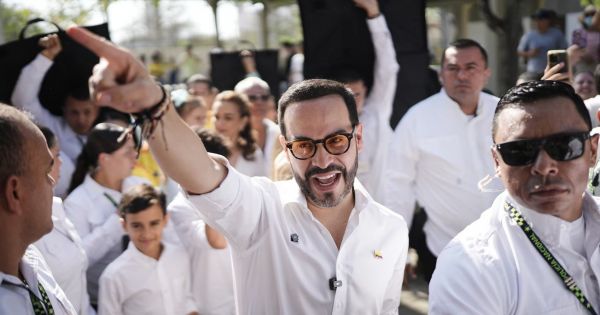
Colombia elected a new president and the result shook the political board. Abelardo De la Espriella, a criminal lawyer turned businessman and media figure, defeated the ruling party candidate, Iván Cepeda, in a runoff election that left the country split down the middle. With 100% of the votes counted, the leader of the Defenders of the Homeland movement achieved a narrow victory that marks a shift to the right after Gustavo Petro’s government.
Sunday’s election day was marked by extreme polarization. While the ruling party defended the continuity of the Historic Pact project, the opposition united behind the figure of De la Espriella, a man who until eleven months ago held no public office. His political rise was meteoric: he launched his movement in July 2025 and in record time built a solid enough electoral base to contest the presidency.
In the first round, De la Espriella had already made a splash by obtaining 43.78% of the votes, a result that positioned him as the favorite for the runoff. Finally, in the ballotage, he managed to prevail by a narrow but decisive margin, consolidating the opposition vote and capitalizing on discontent with the outgoing administration.
De la Espriella, 47, was born in Bogotá but grew up in Montería, Córdoba. His professional career led him to become a renowned criminal lawyer, representing businessmen and high-profile figures in cases of great media impact. He also developed ventures linked to the luxury segment, cultivating an image of business success that he exploited during the campaign. His direct style, intense presence on social media, and high-impact events allowed him to gain visibility in record time.
During the campaign, the incoming president presented himself as a staunch opponent of the left and showed closeness to leaders such as Javier Milei and Donald Trump. His discourse focused on restoring security, fighting crime, and strengthening state authority. He also sought the support of Catholic and evangelical sectors through conservative positions on social issues, including his rejection of abortion and policies related to the so-called gender ideology.
The now president-elect promised to apply management criteria typical of the private sector to improve state efficiency and promote economic growth. Among his main proposals are toughening security policies, strengthening law enforcement, an offensive against criminal structures, and greater controls to combat corruption. He also committed to promoting reforms aimed at reducing bureaucratic hurdles, stimulating private investment, and strengthening productive activity.
De la Espriella’s rise to power opens a new political chapter for Colombia. The next president will have to face challenges related to security, economic activity, employment, and governance in a fragmented political landscape. The great challenge will be to turn his campaign promises into concrete results and demonstrate that the leadership that led him to electoral victory can translate into an administration capable of responding to the demands of a society that calls for solutions to the country’s structural problems.

Para mí este país no aprende más, un abogadito berreta de la derecha se queda con la presidencia y nosotros laburando para pagar impuestos que se van a los bolsillos de estos lacras. La mano dura es para los pobres, siempre. Este pelotudo va a cagar Colombia, vergüenza total, el pueblo se merece algo mejor que este facho de mierda.
Para mí esto huele a que al fin Colombia se va a enderezar de una buena vez. Este tipo va a limpiar el Chocó de esos zurditos kukas que tanto daño hicieron. Yo creo que los zurdos lloran porque saben que se les acabó el curro. ¡Vamos carajo, que la mano dura es lo que hace falta!