
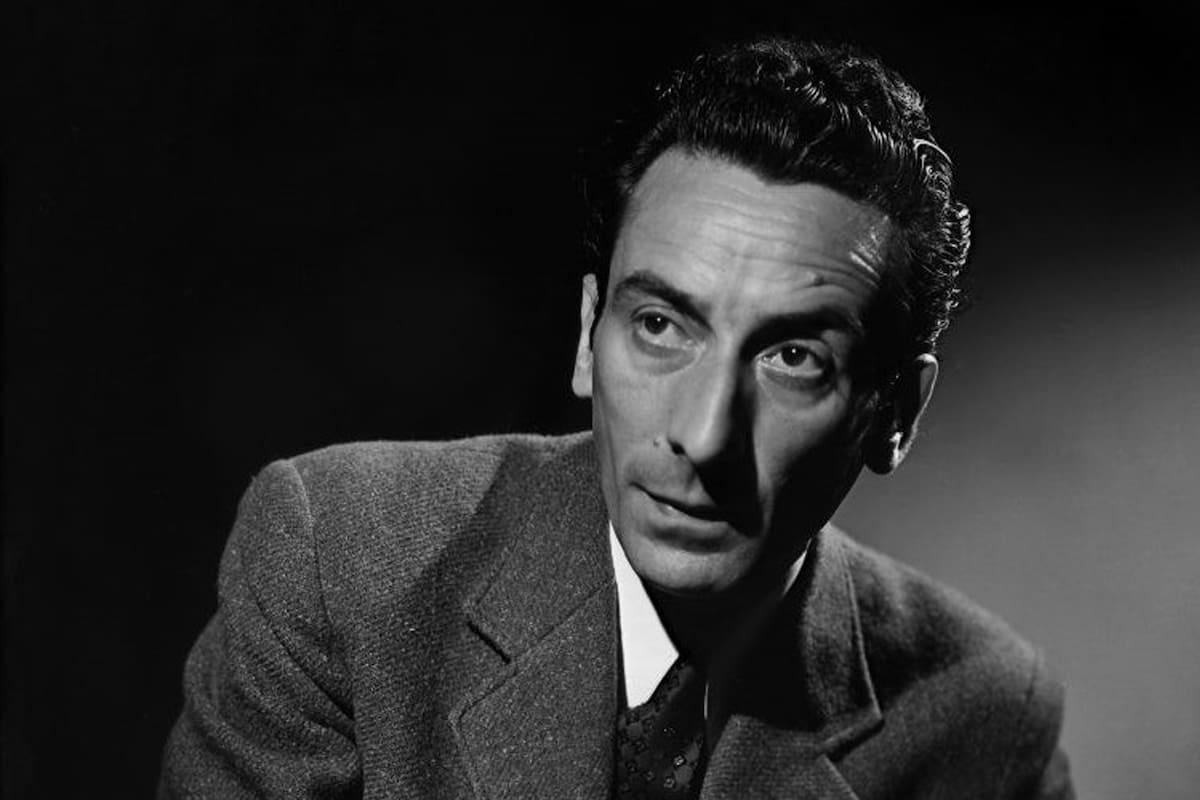
In tango mythology, the maternal figure is a key, central, and powerful piece, as Hera was on Mount Olympus or Juno in the Roman firmament. But the strange comparison of a mother with a Buenos Aires café does not go unnoticed. Digging into the song ‘Cafetín de Buenos Aires’ and, above all, into the life of its author, Enrique Santos Discépolo, it is possible to find some answers.
‘Cafetín de Buenos Aires’ is one of the most famous tangos written by Discépolo, with music by Mariano Mores. The piece was not born overnight, inspired by some dream, but from a very specific request that Mores made to the great Discepolín. He needed a song for the film Corrientes, calle de ensueños. The pianist thought of sending the music, which was already written, to the lyricist with whom he had previously worked and had achieved great success in 1943: none other than the tango ‘Uno’. Time was crucial: barely a week. And Discépolo fulfilled that request.
The curious thing was that, beyond what could happen inside a Buenos Aires café at the end of the first half of the 20th century (the tango premiered in 1949), there are personal affections that Discépolo slipped into his verses. The song narrates part of the story of a life told at a café table, even from the moment the story is lived from outside. That masterful beginning (‘As a little kid I watched you from outside, like those things that are never reached’) is, among other things, the life of the boy who wanted to be older, but who, still in short pants, was forbidden entry into the adult world that took place or, rather, was told, among those tables and chairs.
School of life, that café taught the initiation rites: ‘The cigarette, faith in my dreams and a hope of love’. Showcase of a surreal fauna, it caused the enchantment of permeable ears and eyes: ‘In your miraculous mix of know-it-alls and suicides, I learned philosophy, dice, gambling and the cruel poetry of not thinking about myself anymore. You gave me in gold a handful of friends, who are the same ones that encourage my hours’. Also the disenchantments, as he says a few verses later: ‘On your tables that never ask, I cried one afternoon the first disappointment, I was born to sorrows, I drank my years and I gave up without a fight’.
Is Discépolo’s life told in these stanzas? Partly yes. But it is also possible to create a fiction, and suppose that this giving up without a fight had to do with a rather fleeting love and a Mexican son he never knew. There is plenty of data about that love that did not come to be (because Discépolo did not dare?) and so many other situations in his life to novelize the story of this café and its author.
In a profile from the newspaper El Laborista, published on December 24, 1951, currently rescued by elhistoriador.com.ar, one can read: ‘Enrique Santos Discépolo has died. A friend. An artist. A poet. In his final bitter grimace of a man who suffered a lot sowing emotions made into melodies, the gentle and good smile of always will have been sketched for his friends, for those of us who knew of his antics in life and his deep philosophy that was advancing – at every moment and every hour – along furrows of destiny that with time always come true as he predicted in the long nights of after-dinner conversation and coffee taken on the sidewalk’.
That after-dinner coffee turned into a refuge was also what pushed Discépolo to seek his mother: ‘Cafetín de Buenos Aires, if you are the only thing in life that resembled my mother’. Why does he make that comparison? Perhaps because he only had a distant memory of his mother. Enrique was orphaned as a child. His father, the musician Santo Discépolo, died when he was 5; his mother, the actress Luisa Deluchi, left when Enrique was 8. The first shelter, as soon as he left his mother’s house, was given to him by one of his aunts. But it was not his best time: ‘I went to live in the house of some wealthy relatives, overflowing with unhappiness and feeling like an intruder. I learned to sleep without moving in bed to avoid any noise that might bother those people,’ he once said.
His brother Armando, fourteen years older, opened the doors of that house for him to live with him, and also those of theater, acting and dramaturgy. A new destiny appeared in Enrique’s life, who took a liking to the stage with acting and writing (because he is considered the main responsible for many titles signed together with his brother). In parallel, he carved a way of being, thinking and feeling that he extended to song. He was the philosopher of tango and the one who knew how to give drama to Buenos Aires costumbrismo.
In an excellent report, with great bibliographic support, published five years ago by Fervor Cultura Buenos Aires, Carlos Varela rescues the testimony that the poet and essayist Eugenio Mandrini poured into his book Discépolo, la desesperación y Dios. In that essay, where he dispenses with biographical data, he delves into Discépolo’s thought and projects it with his own words: ‘Perhaps, Discépolo dreamed (or imagined) waiting for Life crouched on a tree and when it passed by, being able to jump on it. Throw his hands around its neck and, with his best howl at the moon, ask it, shout at it, demand from it: Can you tell me why it hurts so much to breathe? Can you tell me why you gave me an ear so damn human that I not only hear the complaints of the world, but I also hear the cries for help that silence gives?’
Perhaps the figure of his older brother, first, and that of his wife Tania, later, were too imposing for him. Perhaps the only and best way he found to heal his orphanhood was to sublimate that loneliness into songs that ended up being unique, as well as raw mirrors of a society and a time full of know-it-alls, suicides, gambling, sorrows, disappointments, ‘drunk years’ and cruel poetry.


para mi es un verso todo esto de discépolo los zurdos romantizan la miseria el cafetín era el refugio de los vagos si el tipo se bancó la orfandá no fue un llorón como los progres de ahora viva la patria y el laburo no la milonga firmado el gaucho del abasto
che me pianto un lagrimon leyendo esto pa mi el cafetin era el unico abrigo de los pibes del pueblo los oligarcas nunca van a entender esa orfandad del corazon ellos nunca necesitaron un cafe pa sentirse en casa soretes viva el tango viva la lucha de clases firmado el loco del centeno