
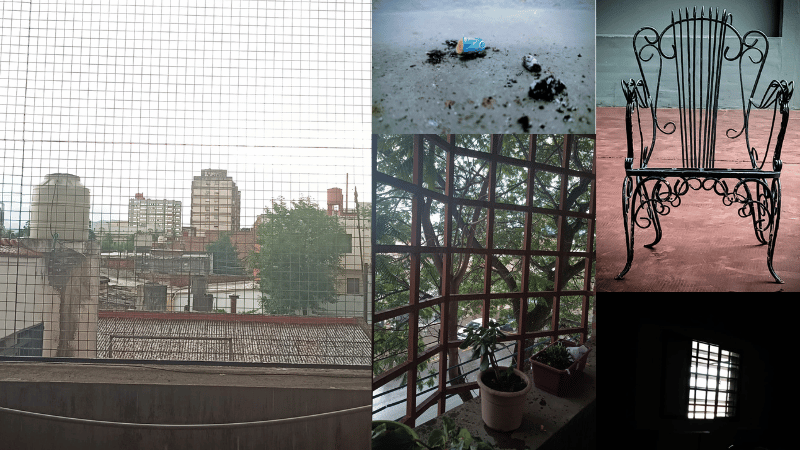
The floor was freezing. But the cold didn’t come only from the tiles. It came from spending the night there, unable to sleep. From witnessing my roommate go through a crisis while the circulating response was the possibility of tying her to a bed. From feeling that an institution designed to care could also become one of the deepest forms of loneliness.
It wasn’t the first time such a practice appeared before my eyes. Nor was it an exception. It was part of a routine. And perhaps that is one of the hardest forms of institutional violence: when it stops being surprising.
For years I imagined the asylum as a distant building, with closed doors and people isolated from the world. Later I understood that asylum-like practices can survive even when doors are painted with inclusion, when discourses speak of rights, and when hospitalizations are much shorter.
The asylum is not just a place. It is a way of organizing care. It persists when the word of someone going through a crisis is worth less than a protocol. When sensory overload in an autistic person is met with an almost automatic response of half an extra clonazepam tablet, instead of someone trying to understand what is happening. When the goal ceases to be accompanying and becomes managing risks. When the priority becomes making the institution function, even if the people living in it stop feeling cared for.
The most visible forms of this logic are well-known: overmedication, physical restraints, coercion. But there are other violences, more silent and persistent. Waiting for hours. Asking for help several times before getting a response. Feeling that suffering must adapt to the institution’s timing. Hearing over and over that «recovery depends on you,» while the material conditions to sustain that recovery disappear.
It would be comfortable to explain all this by saying there are indifferent professionals. It would also be false. Those who work in mental health often arrive exhausted. Nursing staff endure endless shifts. Psychologists, psychiatrists, social workers try to provide support in institutions plagued by lack of resources, deteriorated salaries, and administrative structures that consume time and energy.
Institutional violence does not primarily arise from individual malice. It is the result of institutions organized to manage scarcity rather than produce well-being. When an emergency room operates with less staff than necessary, someone will wait. When a nurse has been working for over twenty hours, fatigue also becomes part of the treatment received by those hospitalized. When time disappears, listening disappears with it.
There is no fight between users and health professionals. There is the same structure that deteriorates care for some and working conditions for others.
Institutions produce more than treatments. They produce power relations. Bureaucracy often presents itself as an administrative matter. Forms. Protocols. Records. Hierarchies. But it also organizes who decides, who waits, who speaks, and who is heard. When procedures weigh more than people, bureaucracy ceases to be an instrument and becomes a form of violence.
The hospitalized person ceases to be someone with a history, a job, relationships, desires, and projects. They become dehumanized and turned into a bed; a diagnosis; a file. But this same logic also reaches those who work there. The nurse stops being the one who accompanies and becomes the one who must distribute medication on an impossible shift. The psychiatrist no longer has time to build a bond. The social worker accumulates cases that exceed any real possibility of follow-up. The institution also strips them of part of their ability to care.
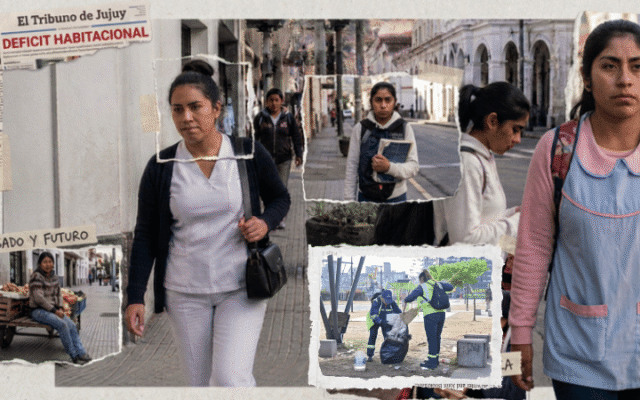
During my hospitalizations, I mainly met women. Many were teachers; others were state workers; there were retirees, precarious workers, young people expelled early from the education system, and people struggling with substance use. Over time, some university students also joined, though they were not abundant. Many of us already knew each other from more than one hospitalization, more than one «relapse.»
None of this seems coincidental to me. It is a portrait of society. Women continue to bear a disproportionate share of caregiving and social reproduction tasks. They work inside and outside their homes, care for children, the elderly, and sick family members, while trying to survive on wages that lose purchasing power and increasingly long workdays.
Nor is it coincidental that professions like nursing are deeply feminized. Those who sustain care on a daily basis also do so under increasingly precarious conditions. Capitalism offloads onto women much of the work necessary to reproduce life, and when that burden becomes unbearable, it responds by individualizing suffering. And there too, women are on the front line of care.
The question ceases to be why so many women reach their limit and becomes how to get them functioning again.
None of this began with Javier Milei’s government. Asylum-like practices and the defunding of mental health have a long history. But the current government represents a qualitative leap. Its austerity plan not only reduces budgets. It attacks the material conditions that make it possible to sustain a dignified life. Every layoff, every cut in healthcare, every lost labor right. Every attack on public education; every setback on the achievements of the women’s and diversity movement. All are part of the same offensive.
While the networks that sustain life are dismantled, more and more people arrive at mental health institutions burdened by suffering that this same social model helped produce. Then, the system itself tells them that the solution depends solely on them.
Perhaps that is the deepest violence that ran through this entire experience: convincing us that our problems are only ours. That the crisis is an individual failure and that recovery depends solely on our tools. That asking for support is a form of weakness.
But no one builds well-being in solitude; you don’t get out of a crisis alone. A nurse doesn’t care alone after a twenty-four-hour shift. And much less does she sustain a family and all the caregiving tasks that the State abandons. She doesn’t transform an institution alone, someone who tries to humanize it from within.

Para mí esto es lo que pasa cuando los gorilas de Milei recortan salud mental mientras se llenan los bolsillos. Las pibas y laburantes siempre en la lona. Me parece una vergüenza, la salud mental es un derecho no un lujo. Milei chorro vos y tu ajuste son una cagada. Fdo: La Gorda de la Fábrica
Para mí este artículo es un lloro de zurdos que no quieren laburar. La salud mental se arregla con familia y laburo, no con plata del Estado. Milei tiene razón: hay que ajustar a los vagos que viven de mis impuestos. Las minas y laburantes necesitan menos psicólogos y más guita en el bolsillo. ¡Viva la libertad, carajo!