
Behind that serene curtain dotted with twinkling lights we admire on dark nights, especially outside cities, lies a turbulent reality worthy of a Shakespearean tragedy. And not only in the early universe, when the initial explosion would have started time, space, and matter, but also in later eras.
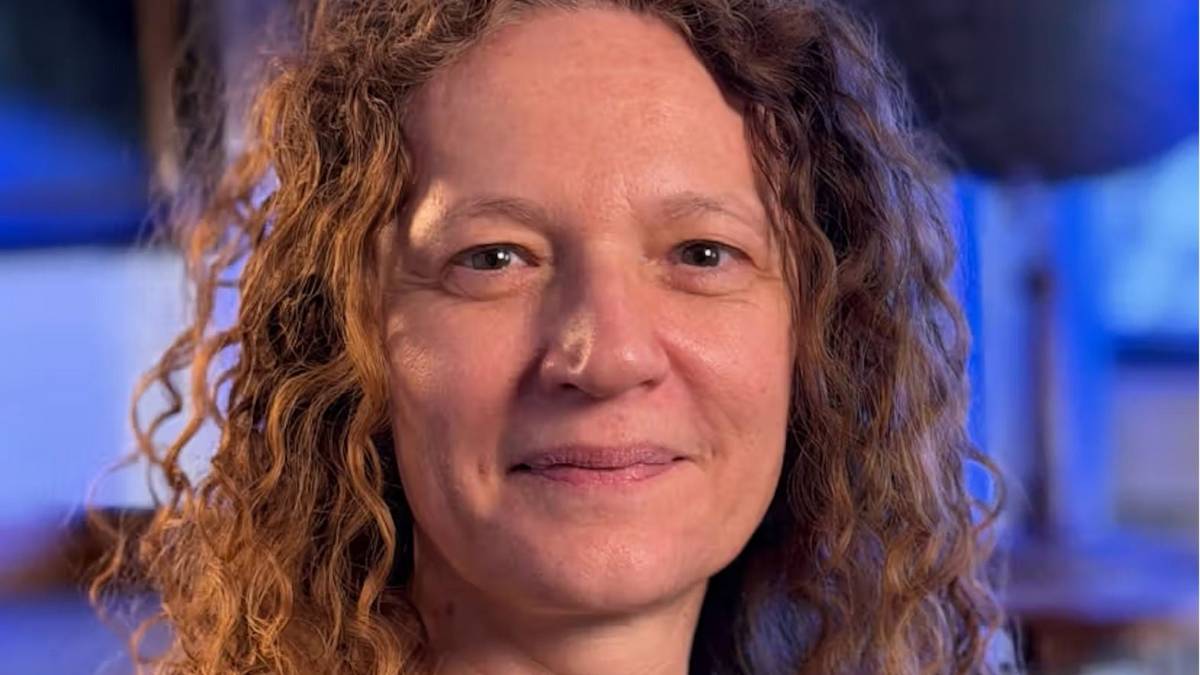
Argentine astrophysicist Amina Helmi, born in Bahía Blanca and educated at the national university of that city, but a resident of the Netherlands for three decades, discovered one of the processes that are part of that saga and help shape our «cosmic neighborhood,» the Milky Way, the galaxy that contains the Solar System. These are «stellar streams,» the trail of debris left by stars attracted and destroyed by its gravity.
For her findings, in September she will receive the renowned Kavli Prize, awarded by the foundation of the same name in collaboration with the Norwegian Academy of Sciences and endowed with one million dollars per category. It is something like the equivalent of a Nobel Prize awarded every two years in three disciplines: nanotechnology, astrophysics, and neuroscience. Along with her, astronomers Vasily Belokurov from the University of Cambridge and Rodrigo Ibata from the Strasbourg Observatory, who made contributions on the same topic, were also awarded.
While doing her doctorate and as telescopes of unprecedented power allowed seeing increasingly distant objects closer to the initial moments of the universe, Helmi thought to explore our neighborhoods. She was working on her doctoral thesis when she became interested in determining whether the Milky Way formed through mergers with other galaxies and how important they had been, for which she developed mathematical models that predicted how traces of these events would be imprinted in the motion of stars.
«When I started, it wasn’t a very popular topic; we didn’t know exactly what we would find,» she comments from her home in Groningen, Netherlands, where she teaches at the university. «The models helped me understand what the traces of these processes would be. And I realized we needed records of the motions of stars in space. When I was doing my thesis, the star catalogs that had measurements of these trajectories were very small, because it’s a very difficult measurement to make. But I told myself I would try anyway. And I discovered two groups of stars that actually come from the same object that merged with the Milky Way.» They were 12 stars, remnants of a small galaxy that collided with the Milky Way 8 or 9 billion years ago, long before the Solar System existed; literally, the limit of what the data allowed to see. It was the first discovery of its kind. Today, these structures are known in the scientific literature as Helmi Streams.
When that first discovery was published, a space mission was beginning to take shape at the European Space Agency: Gaia, an observatory designed to map with unprecedented precision the position and motion of billions of stars. Helmi became involved in planning the project to define exactly what precision was needed, how many stars should be measured and with what detail, to reconstruct the galaxy’s merger history.
Gaia was launched in 2013. The first relevant scientific data were published in 2018. And what happened on April 25 of that year, during the launch event of the mission’s second catalog, was a «Eureka!» moment.
«It was clear from the first graphs we made that day that there was something extraordinary in the data,» she recalls. «Together with a group of colleagues, we spent four weeks of intense work analyzing what we saw: a huge object that dominated the stellar halo of the galaxy, with very particular orbits and chemical signals that clearly distinguished it from stars formed within the Milky Way.» It was evidence of the last major merger of our galaxy: a monumental collision with a dwarf galaxy, which they called Gaia-Enceladus, occurring between 8 and 11 billion years ago. The impact was so violent that it thickened the galactic disk and contributed to forming a significant fraction of the halo, the spherical region of ancient stars that envelops it.
«I was there, 10 billion years later, putting the puzzle together. I got goosebumps. And I felt deep gratitude,» Helmi wrote in an autobiography published by the Kavli Foundation.
One of the things that makes this research especially notable is its reverse logic. Instead of looking at distant galaxies to study the early universe, Helmi and her colleagues read the present, the stars around us, as an archive of what happened billions of years ago.
«Just as we have access to these stars that are so old, formed in the early universe, we also have access, through the remnants of these galaxies, to objects that cannot yet be discovered with telescopes like the James Webb, because they are much smaller,» she explains. «They are two complementary ways of building the history of a galaxy: based on very deep observations of the universe or through nearby observations with incredible detail.»
The Milky Way, observed from outside, looks like a calm and orderly disk. Nothing in its current appearance suggests it was built through brutal collisions. However, Helmi and her team showed that this calm is deceptive. Our galaxy is, in fact, the result of a history of cosmic cannibalism: it absorbed dozens of smaller galaxies throughout its life, and the remnants of those objects destroyed by «tidal force» are still here, traveling in streams that hold the memory of worlds that no longer exist.
Amina Helmi was born on the morning of a Tuesday in October 1970 in Bahía Blanca, daughter of a Dutch mother and an Egyptian father (a soil chemistry professor whose passion for science was her inspiration). They arrived in Argentina in passing and stayed forever. She studied astronomy at the National University of La Plata and left for Europe in the second half of the 1990s, thanks to an Amelia Earhart fellowship, with her then-husband, also an astronomer. Since 2003, she has been a professor at the Kapteyn Institute of the University of Groningen in the Netherlands.
But although her career and life developed there, and her son, Manuel, was born there, Helmi confesses she still feels tied to our country. «Having lived so many years abroad, it’s as if one has a torn heart,» she writes. «I feel proud of the education I received in Argentina. That solid foundation prepared me well for research; in particular, theoretical research. However, I was painfully aware (both from my experience and from my father’s) that dedicating myself to science in my birth country would be very hard. With scarce funding and persistent economic instability, a scientific career is a constant challenge. I also learned, as a child, that hard work and talent are undervalued in my beloved Argentina. Too often, ‘connections’ weigh more than merit.»



Para mí, Amina Helmi es una capa total, mientras los yates de los oligarcas se pudren en puertos, ella desnuda las cagadas cósmicas de la Vía Láctea. Este premio es un cachetazo a los negacionistas y a la astrología pedorra. ¡Viva la ciencia popular, carajo!
che y q tanto show con la mina esta para mi es una zurda q vive del estado premiada por ideologia la via lactea violenta? me parece q lo violento son los planes socialistas q nos arruinan helmi dedicate a laburar pa la patria carajo