
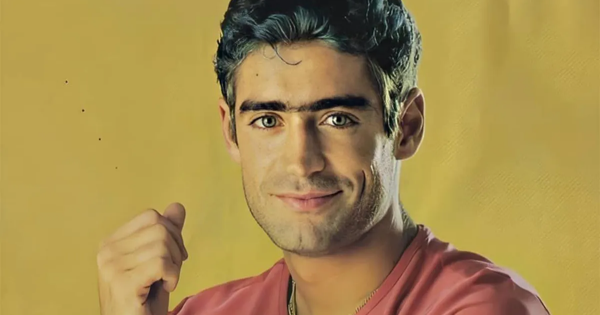
On June 24, 2000, Argentina lost one of its greatest idols. Rodrigo Bueno, the Colt, was returning from a concert in City Bell when his Ford Explorer veered off the Buenos Aires-La Plata highway near Berazategui. The singer, who was not wearing a seatbelt, was thrown from the vehicle and died instantly. Also killed was Fernando Olmedo, son of the late actor Alberto Olmedo. Rodrigo’s son, Ramiro, and the boy’s mother survived.
But the Colt’s story neither begins nor ends with that accident. Born on May 24, 1973 in Córdoba, into a family linked to music — his father, Eduardo «Pichín» Bueno, was a producer, and his mother, Beatriz Olave, a songwriter — Rodrigo made his public debut at age two, lifted onto the stage by La Mona Jiménez. By eleven he was singing with Chébere before five thousand people. At twelve he left school to join Manto Negro. His destiny was cuarteto, and there was no turning back.
The leap to Buenos Aires came with his father’s help. With PolyGram Records he released his first solo album, La foto de tu cuerpo, but mass fame would take time. Only in 1996, with the label Magenta Discos and the album Lo mejor del amor, did Rodrigo find his place: pure cuarteto, without concessions to salsa or merengue. The album earned him the ACE Award for Best Musical Artist. From there, hits piled up: La leyenda continúa went gold, Cuarteteando deepened the phenomenon.
The peak came in 1999 with A 2000, certified quadruple platinum. The ensuing tour redefined the map of Argentine popular music. From April 5, 2000, Rodrigo performed thirteen consecutive nights at Luna Park, all sold out. A record no national artist had achieved before or would achieve after. His son Ramiro recalls that after one of those shows, they returned to their apartment almost without furniture and the three of them slept on a mattress on the floor.
The previous summer, Rodrigo performed 49 concerts in nine days on the Atlantic Coast, one of them before more than one hundred thousand people at Playa Las Toscas in Mar del Plata. His schedule sometimes included between 25 and 30 shows per week. But on April 10, 2000, in the midst of the Luna Park frenzy, he surprised everyone with an announcement few believed: he was retiring. «I retire with the title in hand,» he said. He planned a final tour through Uruguay, Venezuela, Colombia, Brazil, Chile, Puerto Rico and the United States, and a historic closing on December 25, 2000 at River Plate stadium, to be released as Adiós Rodrigo. He wanted to become a music producer. He wanted to stop.
He didn’t have time. The accident in Berazategui cut everything short. The wake was massive: Diego Maradona, Susana Giménez, Marcelo Tinelli and La Mona Jiménez, among thousands, said goodbye to the Colt. At the crash site, a shrine was erected that still receives flowers and candles today.
In his lifetime, Rodrigo sold one million records in a decade. In the first year after his death alone, five new albums were released, selling two million copies amid an economic recession. Posthumously, he received two Carlos Gardel Awards: Best Male Tropical Artist for A 2000 and Song of the Year for Soy cordobés. His brother Ulises Bueno continued the family legacy from 2003.
25 years on, his songs still play. Rodrigo once said: «The day you need me, you’ll put on a CD: I’ll be there.» He was right. The Colt never really left.

el potro era un genio pero estos zurdos de mierda lo quieren agarrar pa ellos el cuarteto es musica del pueblo no de progres caretas viva rodrigo viva cordoba carajo los zurdos siempre quieren apropiarse de todo lo del pueblo pero no les va a salir 🇦🇷
para mi al potro no lo mató un palo lo mató el sistema como a todos los que le cantan al pueblo 25 años y sigue más vivo que estos políticos vendidos que nos roban la alegría viva el cuarteto carajo 🐴🔥