
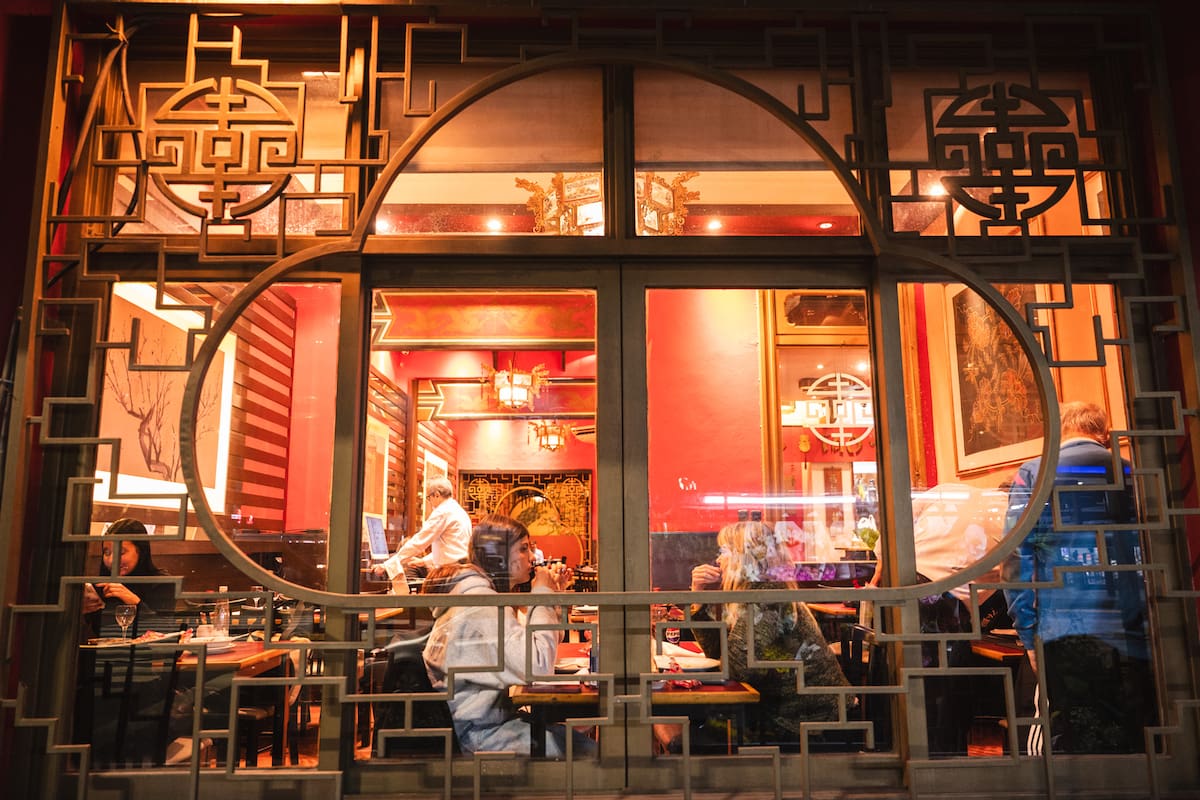
Over the past 60 years, Cabildo Avenue in the Belgrano neighborhood has changed. But the front of the Tao Tao restaurant has remained the same since 1967, when it opened its doors to offer a style of “American Chinese cuisine” at a time when ethnic cuisines were not on the city’s gastronomic map. Over time, those Eastern flavors designed for a Western palate (its chop suey, orange chicken, and spring rolls) became part of everyday life in Buenos Aires.
The story of this gastronomic emblem has an unexpected twist: the true driving force behind the restaurant was not Chinese, but Japanese. Toshio Okada, born in Tokyo, studied hospitality and worked at the Imperial Hotel in Tokyo, considered the best in Japan at the time. As part of his training, he had to do an experience abroad and chose South America. That’s how he arrived in Argentina, where he did an internship at the Hotel Plaza and the Provincial in Mar del Plata, among other places.
“He had studied hospitality and started working at the Imperial Hotel in Tokyo, which at that time was the best in Japan. As part of his job, he had to do an experience abroad and he decided to come to South America. That’s how he arrived in Argentina, where he did an internship at the Hotel Plaza, also at the Provincial in Mar del Plata, among other places. Here in Buenos Aires he was an auditing student at a school nearby on Juramento Avenue. Then he made a trip overland from Argentina to the United States. He was supposed to return to Japan, but he came back to Buenos Aires, bought the restaurant, and stayed here,” recalled Mizue Okada, his wife.
The Tao Tao restaurant had been opened by a Chinese man in 1967, but he put it up for sale because he wanted to go to the United States. Okada, who had always been interested in gastronomy, decided to try his luck. He didn’t have the money to buy it, but a Japanese friend lent it to him. He took over the restaurant in November 1970 and soon after married Mizue.
“He kept all the staff; in fact, there were waiters who were there before and later retired with us. But what my husband had learned in Japan was restaurant service work, so the first thing he did was a thorough cleaning of the place and had the staff start offering really good service. Shortly after reopening, the previous owner came one day and said, ‘Mr. Okada, it’s amazing how you work!’ On the other hand, my husband had the idea that Chinese food should be more popular, as it was in other parts of the world. Until then, in Argentina, Chinese food was considered a special meal. So what he did was lower the price, because Tao Tao used to be a very expensive restaurant,” added Mizue.
The opening to Asian food, according to Mizue, only came during the Menem era. They even opened a Japanese restaurant called Tokio, but it didn’t work: “People still didn’t want anything to do with raw fish. What always sold, as it does now, was chicken with almonds, rice, and spring rolls.”
The success of Tao Tao led the family to open new locations. One of the most emblematic was Mandarín Tao Tao, on Rodríguez Peña and Santa Fe, which operated in an old house they renovated for a year. “It was also the time when imports were open, so we were able to bring in a lot of Chinese decorative elements, like the little lanterns,” Mizue recalled. Celebrities like Jorge Luis Borges, Mercedes Sosa, Mario Pergolini, Horacio Guaraní, and Raffaella Carrà went there. “Borges came to eat at noon very often. He ordered Chinese dumplings. Sometimes he came with Kodama, other times he came alone,” she said.
But the biggest milestone for the Okada family was the creation of the city’s first “all-you-can-eat.” “My husband invented the word. And at the time it worked very well. Older people preferred to be served and didn’t get hooked, but it was a boom with young people,” Mizue assured. The concept was implemented at Palacio Tao Tao, first on Cabildo and then on Luis María Campos and Teodoro García.
Toshio Okada passed away 28 years ago, but his legacy lives on. “One of his last ideas, before he died, was to bring the concept of ‘food by the kilo’ to the country, which he had seen working very well abroad,” Mizue recalled. Today, Tao Tao continues to be run by the Okada family through Mizue and her son Francisco.


para mi este japones vino a explotar a los laburantes con el tenedor libre mientras los porteños se hacen los intelectuales comiendo sushi barato borges y mercedes sosa eran unos vendidos al sistema gastronomico no me vengan con cuentos de revolucion es puro capitalismo amarillo viva la comida popular y la lucha de clases
Para mí esto es claro: el tenedor libre lo inventó un japonés pero los zurdos lo copiaron para traer inmigración descontrolada. Borges y Mercedes Sosa comiendo ahí mientras Belgrano se llena de extranjerismo. Yo creo que este tipo trajo el caos, ¡volvé a tu país y dejá de arruinar la argentinidad!