
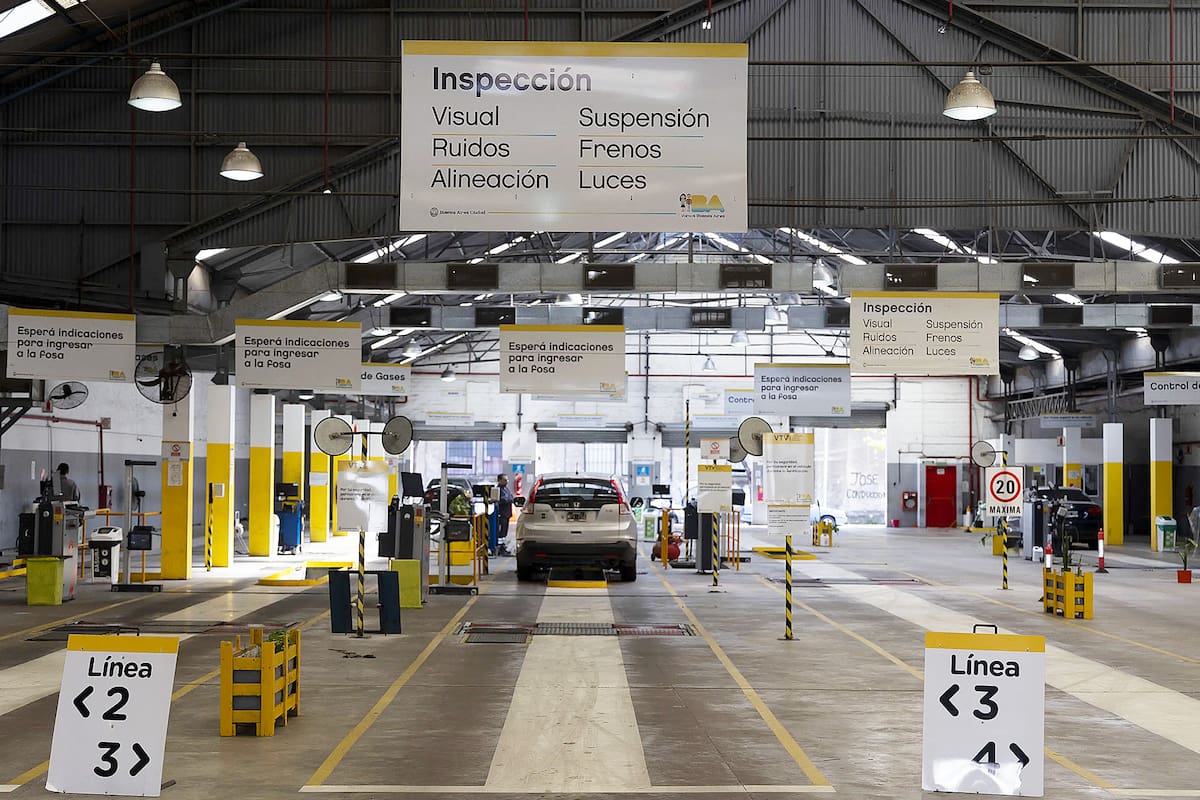
The City of Buenos Aires shook up the Vehicle Technical Inspection market with a reform that promises to end the old scheme of seven official plants. The City Legislature, driven by La Libertad Avanza and backed by the PRO and UCR, approved a law that adheres to national deregulation and enables an open system with free prices and new deadlines. Peronism voted against but could not stop the change.
Starting in October, Buenos Aires drivers will be able to get their VTV done at any authorized workshop, including dealerships. Deregulation Minister Federico Sturzenegger celebrated the measure on social media: «Very good news. Starting in October, it can be done at any authorized workshop, for example, at dealerships.» And he did not miss the opportunity to highlight differences with the province of Buenos Aires, which maintains its closed regime under the administration of Axel Kicillof.
Until now, the VTV in the City was concentrated in just seven centers, four of them in Barracas. The remaining ones were in Paternal, Pompeya, and Villa Ortúzar. The new law breaks that oligopoly: any establishment that meets the technical requirements can join. The Premium Wheels workshop in Parque Patricios has already purchased the equipment and started training to be one of the first private providers to offer the service.
The most impactful change is the price liberalization. Until today, the fee was set by the Buenos Aires City government. Under the new regulation, each provider will set its own price. The official bet is that competition among more workshops will lower costs for drivers. But it remains to be seen whether it will end up being more expensive, as critics warn.
Deadlines are also more flexible. New cars will now have five years for their first inspection, instead of the current four. And the two-year validity will be maintained until the vehicle is ten years old, previously it was until eight. A relief for wallets, although the most skeptical doubt about road safety.
To be authorized, each workshop must register in the Single Workshop Registry, submit a sworn statement, and have a technical director who is an engineer. The minimum equipment includes brake, light, suspension, steering, emissions, and noise control. The investment is not cheap: a complete line for light vehicles costs between 50,000 and 60,000 dollars, according to Constantino Abella Roigt, president of Control Vehicular Argentino.
The Transportation Secretariat has 30 days to review the documentation. If there are no observations within that period, the workshop is automatically registered, although it can be audited later. The physical certificate does not disappear: workshops must upload the information and deliver the sticker for the windshield.
But beware, this does not apply to everyone. Argentina is federal and each province decides whether to adhere. The province of Buenos Aires has already said no and will maintain its current system. So the changes will depend on where the vehicle is registered. Sturzenegger again attacked Kicillof, as the political fight intensifies.
The debate is set: more competition and free prices or risk of lack of control? The City bets on the former. Drivers, meanwhile, eagerly await the coming October.

Comentarios